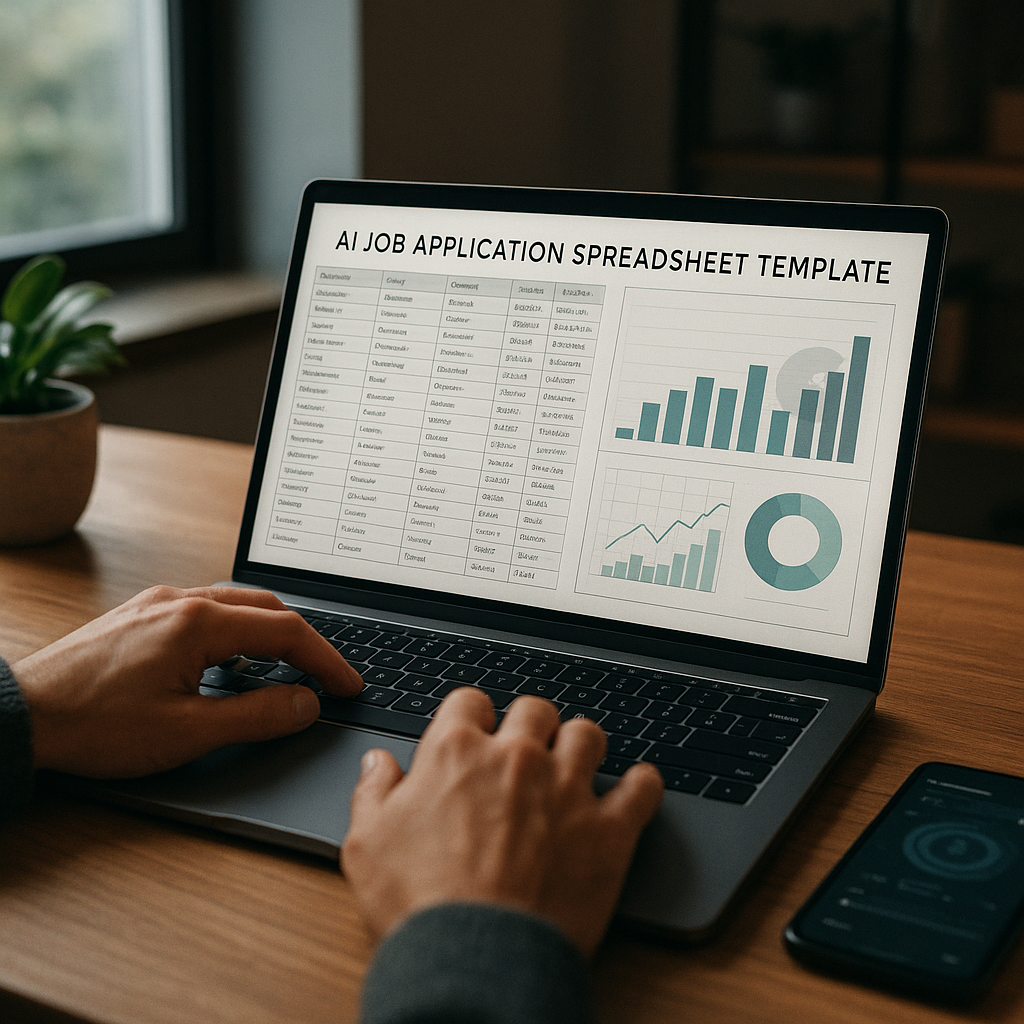
AI job application tracker template (Notion + Sheets)
Build an AI job application tracker template Notion Sheets job seekers can actually stick with—complete with statuses, reminders, and fields that capture what’s working. This guide shows exactly what to track (and what to automate) so you stop losing opportunities to missed follow-ups and messy notes.
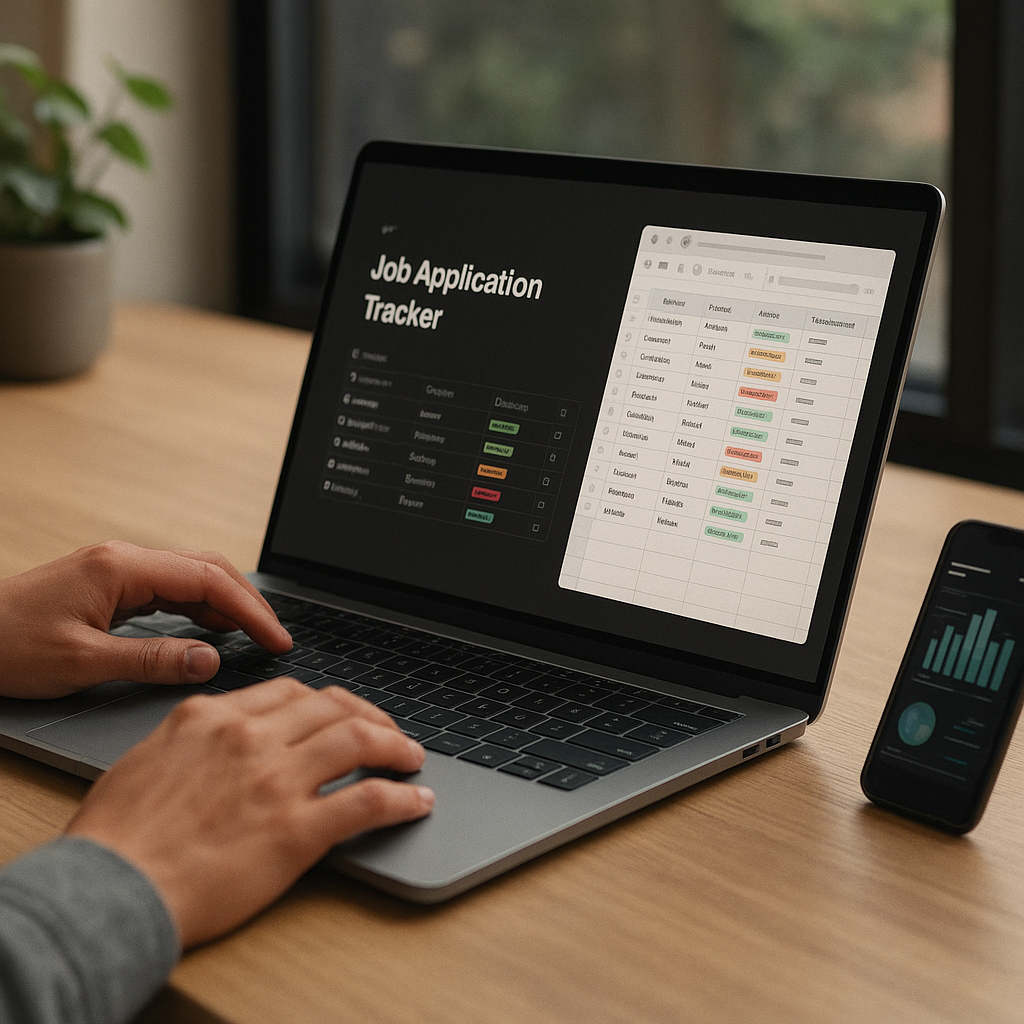
Job searching in 2026 isn’t just “apply and wait.” It’s a high-volume workflow: multiple roles, multiple platforms, different versions of your resume, and follow-ups that can make or break your chances. The problem is most trackers are either too simple (so you still lose details) or too complicated (so you stop using them).
This guide helps you build an ai job application tracker template notion sheets job seekers can actually stick with—complete with statuses, reminders, and fields that capture what’s working. You’ll learn exactly what to track (and what to automate) so you stop losing opportunities to missed follow-ups, duplicated applications, and messy notes.
Why an AI-powered tracker matters in the 2026 job market
Recruiting moves fast, and it’s increasingly signal-driven: response speed, tailored materials, and consistent follow-up often separate candidates who get interviews from those who get ghosted. At the same time, candidates are applying to more roles across more channels (company sites, LinkedIn, niche boards, referrals, recruiters, staffing agencies). If your system can’t answer “What should I do today?” you’ll fall behind.
A good tracker does three things:
- Prevents leaks: no missed follow-ups, no “I forgot I already applied,” no lost recruiter names.
- Improves your ROI: you see which sources, titles, and resumes are producing interviews.
- Reduces cognitive load: instead of holding everything in your head, your tracker tells you what’s next.
“AI” doesn’t mean replacing your judgment. It means using automation and lightweight intelligence (formulas, prompts, summaries, reminders, and scoring) to do the repetitive parts consistently.
What to track (and what NOT to track) in an AI job application tracker
If your tracker feels like paperwork, you won’t use it. The rule: track what changes outcomes.
The “must-have” fields (high impact, low maintenance)
These fields power most of the automation and insights:
- Company
- Role title
- Job link (or PDF snapshot)
- Source (LinkedIn, referral, company site, recruiter, etc.)
- Status (standardized—see the next section)
- Date applied
- Last touch (last email, call, message)
- Next action date (the single most important field for follow-ups)
- Contact (name + email/LinkedIn)
- Resume version (e.g., “PM-General-v3”)
- Cover letter? (Yes/No)
- Priority (High/Med/Low, or a numeric score)
- Notes (short + structured prompts)
“Nice-to-have” fields (only if you’ll use them)
- Compensation range, location, remote/hybrid, visa needs
- Interview stages + dates
- Skills match tags (SQL, stakeholder mgmt, Python, etc.)
- “Why I’m excited” (helps for interviews—but keep it brief)
What NOT to track (common overkill)
- Long narrative notes copied from the job description
- Too many custom statuses (you’ll stop updating them)
- 10+ scoring categories (you won’t maintain the data quality)
A tracker is a decision engine. If a field doesn’t change what you do next, remove it.
Build your statuses and follow-up reminders (the part most trackers get wrong)
Most job trackers fail because statuses don’t map to actions. Fix that by using statuses that clearly trigger the next step.
Recommended status system (simple, action-based)
Use 8–10 statuses max:
1. Saved (To Apply)
2. Applied
3. Follow-up Due
4. Recruiter Screen Scheduled
5. Interviewing
6. Take-home / Assignment
7. Offer
8. Rejected
9. On Hold / Hiring Freeze
10. Withdrew
Key idea: “Follow-up Due” is not a final state—it’s a workflow alert.
Follow-up timing that works in 2026
A realistic cadence (adjust by industry):
- After applying (no response): follow up in 5–7 business days
- After recruiter screen: send thank-you same day; nudge if no next steps in 3–5 business days
- After interview: thank-you same day; follow up if silent in 4–6 business days
- After take-home submission: confirm receipt + timeline; nudge in 3–5 business days
A simple reminder rule to automate
Set Next action date automatically based on status:
- If
Status = Applied,Next action = Date applied + 7 days
- If Status = Interviewing, Next action = Last touch + 5 days
- If Status = Follow-up Due, Next action = Today (so it surfaces immediately)
This is where your ai job application tracker template notion sheets setup becomes a daily assistant instead of a static spreadsheet.
The best AI job application tracker template: Notion + Sheets (and why you may want both)
Notion is great for context (notes, templates, interview prep). Google Sheets is great for calculations, filtering, and quick data entry at scale. In 2026, the best system for many job seekers is Notion for workflow + a lightweight Sheets dashboard for analytics, connected via copy/paste or automation if you like.
Notion: best for execution and clarity
Use Notion as your “command center”:
- Kanban board by status
- Role pages with interview notes and company research
- Templates for outreach messages and thank-you emails
- Linked tasks and reminders
Google Sheets: best for analytics and pattern recognition
Use Sheets when you want to answer:
- Which sources lead to interviews?
- What’s my application-to-interview conversion rate?
- Which resume version performs best?
- How long does each stage take?
Feature comparison (honest pros/cons)
| Feature | Notion | Google Sheets | Best Use |
|---|---|---|---|
| Fast bulk entry | Medium | High | Sheets for high-volume applying |
| Kanban pipeline | Excellent | Basic | Notion for daily workflow |
| Notes + templates | Excellent | Medium | Notion for interview prep & context |
| Filtering + pivot tables | Medium | Excellent | Sheets for analytics & trends |
| Reminders | Good (with database views + integrations) | Medium (via scripts/add-ons) | Notion for simple, visible follow-ups |
| AI summaries (your notes → next steps) | Strong | Medium | Notion to summarize calls/interviews |
| Sharing with mentor/coach | Good | Excellent | Sheets for quick sharing; Notion for richer context |
Verdict: If you want one tool only, pick Notion. If you want to improve outcomes faster, use Notion + Sheets: Notion for action, Sheets for insight.
Step-by-step: create your AI job application tracker template in Notion (in 30 minutes)
Step 1: Create a database with the right properties
In Notion, create a Table database called “Applications” with these properties:
- Role (Title)
- Company (Text)
- Status (Select)
- Priority (Select or Number)
- Job Link (URL)
- Source (Select)
- Date Applied (Date)
- Last Touch (Date)
- Next Action Date (Date)
- Contact Name (Text)
- Contact Link (URL)
- Resume Version (Select)
- Outcome (Select: Interview / Rejected / Ghosted / Offer)
- Notes (structured) (Text)
Keep your “Notes” structured by using a mini-format like:
- Hook: why this role fits
- Risk: what’s missing
- Next: next message to send
Step 2: Add a formula to surface what needs attention
Add a Formula property: Action Needed?
Example logic (plain English):
- If Status is Rejected/Offer/Withdrew → blank
- If Next Action Date is today or earlier → “Do today”
- If Next Action Date is in the next 2 days → “Upcoming”
This becomes your daily to-do filter.
Step 3: Create 3 views you’ll actually use
1. Board: Pipeline (group by Status)
2. Table: Today (filter Action Needed? = “Do today”)
3. Table: High Priority (Priority = High AND Status not in Rejected/Offer)
If you build only one habit: open the Today view every morning.
Step 4: Add templates inside each application page
Create a Notion page template named “New Application” with:
- Outreach message draft
- Follow-up message draft
- Interview notes section
- Research checklist (2–3 bullets: product, team, recent news)
This is where Notion shines: you stop recreating work every time.
Step-by-step: build the Sheets dashboard that tells you what’s working
Create a Google Sheet with one tab called Applications (Data) and these columns:
- Company
- Role
- Status
- Source
- Date Applied
- Date First Response
- Interview Stage Reached (0–3)
- Resume Version
- Referral? (Y/N)
- Outcome
- Next Action Date
Add 5 formulas/metrics that change your behavior
On a Dashboard tab, calculate:
1. Applications/week (to monitor volume)
2. Response rate = responses / applications
3. Interview rate = interviews / applications
4. Best source (pivot: Source → count of Interviews)
5. Best resume version (pivot: Resume Version → interview rate)
How to use it:
If LinkedIn Easy Apply gives you volume but low interviews, and referrals give fewer applications but higher interview rate, you’ll rebalance your effort.
Optional: a simple “Fit Score” (not perfection, just consistency)
Add three columns with values 0–2:
- Skill match (0–2)
- Level match (0–2)
- Interest (0–2)
Then Fit Score = sum (0–6).
This helps you prioritize follow-ups and tailor your resume where it matters most.
What to automate with AI (and what to keep human)
AI helps most when it reduces repetition and improves consistency.
Automate these (high ROI)
- Summarize recruiter calls into bullets (key requirements, timeline, concerns)
- Generate a follow-up message draft based on your last touch + role context
- Extract key keywords from the job post to verify your resume is aligned
- Weekly insights: “Which sources produced interviews this week? What stalled?”
Keep these human (or at least human-reviewed)
- Final resume edits (tone, accuracy, outcomes)
- Any claim about metrics, impact, or leadership
- Negotiation, sensitive messaging, and anything reputational
A practical mid-flow option: Apply4Me (when you want built-in AI + tracking)
If you like the Notion + Sheets approach but want fewer moving parts, Apply4Me is built to handle the “messy middle” of job searching in one place. It combines a job tracker, ATS scoring, and application insights (so you can see what’s working), plus auto-apply for roles that match your criteria. It also supports mobile + web, and includes career path planning and interview prep—useful when your tracker shows you’re getting screens but not converting to final rounds.
Notion + Sheets is powerful. Apply4Me is what many candidates use when they want that same structure—without maintaining templates and formulas.
Daily workflow: how to actually stick with your tracker (10 minutes/day)
The secret isn’t motivation—it’s a repeatable routine.
The 10-minute tracker routine
Every morning (5 minutes):
- Open “Today” view (Notion) or filter by Next Action Date (Sheets)
- Send 1–3 follow-ups
- Move statuses (Applied → Follow-up Due → Interviewing, etc.)
Every evening (5 minutes):
- Log what you applied to (even if it’s minimal)
- Update Last Touch + Next Action Date for any conversations
- Add one note: “What did I learn from today’s outreach?”
Weekly review (20 minutes, once a week)
- Identify your top-performing source and double down
- Drop or deprioritize low-yield channels
- Refresh 1 resume version based on the roles that are responding
- Clean the pipeline: archive dead roles, mark ghosts, reset focus
Trackers work when they’re tied to decisions: what to apply to next, who to follow up with, and how to adjust your approach.
Conclusion: turn your tracker into interviews, not busywork
A well-designed ai job application tracker template notion sheets system doesn’t just store information—it prevents missed follow-ups, helps you prioritize the right roles, and shows you which channels and materials actually produce interviews. Build the lean Notion database for daily execution, add a small Sheets dashboard for analytics, and let lightweight AI handle summaries and drafts so you stay consistent.
If you want the benefits of tracking + automation without maintaining templates, try Apply4Me free to track applications, get ATS scoring and insights, and streamline follow-ups in minutes—so you spend less time managing your search and more time landing interviews.
Frequently Asked Questions
What should an AI job application tracker include in 2026?
At minimum: company, role, job link, source, status, date applied, last touch, next action date, and contact info. Add resume version and outcome so you can measure what’s working and improve your interview rate over time.
Is Notion or Google Sheets better for a job application tracker?
Notion is better for a daily workflow (pipeline board, notes, templates, interview prep). Google Sheets is better for analytics (filters, pivots, conversion rates). Many job seekers get the best results using Notion for execution and Sheets for performance insights.
How often should I follow up after applying?
A common cadence is 5–7 business days after applying if you haven’t heard back, and 4–6 business days after an interview if there’s no update. Use a “Next action date” field so follow-ups happen automatically instead of relying on memory.
How do I use AI without making my applications sound generic?
Use AI for structure (summaries, keyword extraction, draft follow-ups), then personalize the final message with specifics: the team/product, one relevant accomplishment, and a clear ask. Always verify accuracy—especially metrics, titles, and project claims.

Jorge Lameira
Author