AI job application quality score: how to measure it
If you’re using automation, the real edge is quality—not volume. This guide breaks down the AI job application quality score and shows how to track relevance, ATS fit, and submission success so you can improve callbacks without blasting hundreds of applications.

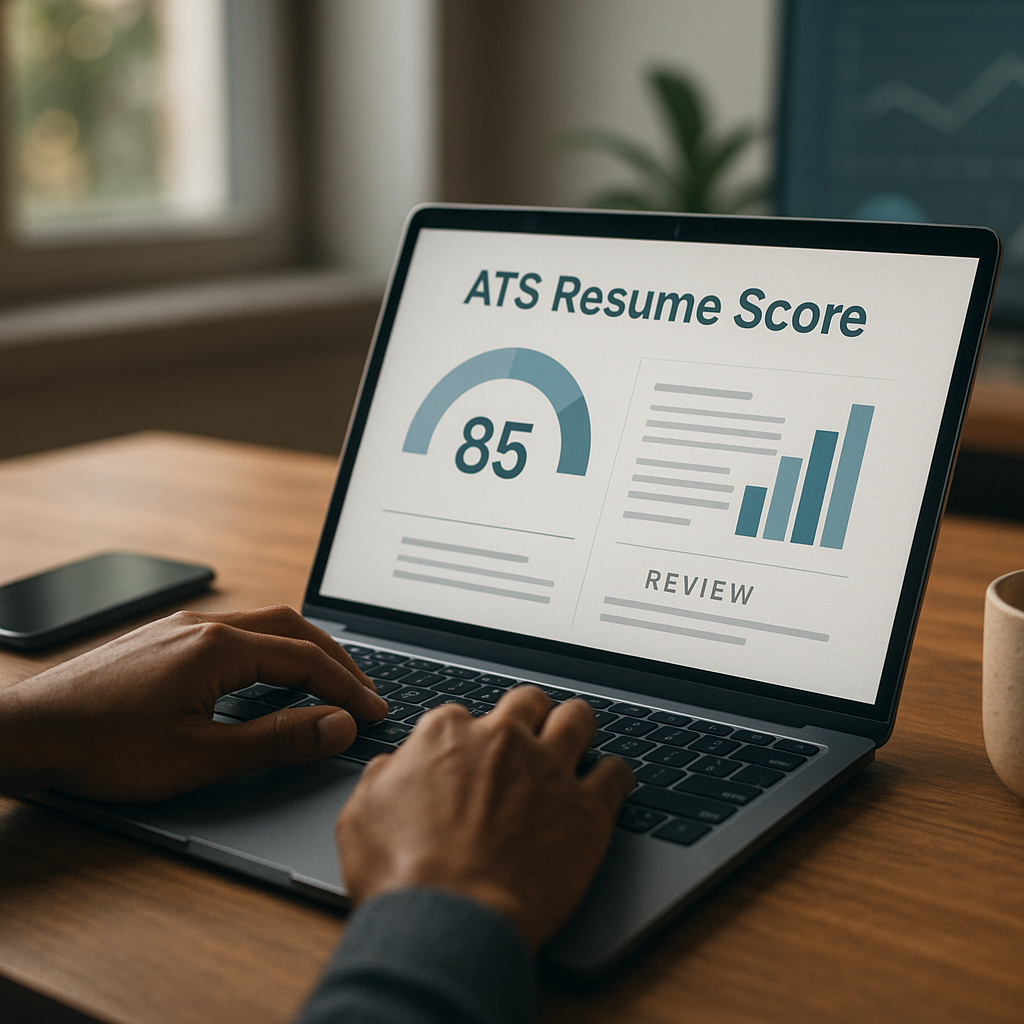
If you’re using automation in your job search, the real edge is quality—not volume. An ai job application quality score is a practical way to measure (and improve) how well each application aligns with a role, passes ATS filters, and converts into interviews. Instead of “I applied to 200 jobs,” you’ll know “My quality score is 82/100 on roles I’m targeting—and my interview rate is rising.”
This guide breaks down what the score should include, how to calculate it with real metrics, and how to improve it in the 2026 hiring landscape—where recruiters are overwhelmed, ATS systems are stricter, and personalization matters more than ever.
What is an AI job application quality score (and why it beats “applications sent”)?
An ai job application quality score is a repeatable scoring system that grades each application on factors that correlate with callbacks:
- Relevance: Are you genuinely a fit for what the employer asked for?
- ATS fit: Is your resume parseable and keyword-aligned without being spammy?
- Personalization & proof: Do you back claims with outcomes, tools, and scope?
- Submission success: Did the application actually submit cleanly, with no broken fields, missing docs, or mismatched answers?
- Conversion signals: Do applications with higher scores produce interviews at higher rates?
In 2026, “spray and pray” tends to underperform because:
- ATS and knock-out screening questions filter earlier.
- Recruiters often skim for role-specific proof (outcomes + tools + domain).
- Many companies use structured scoring rubrics internally; your materials need to map to them.
A quality score gives you a feedback loop—so your process improves weekly, not randomly.
The 5-part AI job application quality score model (100-point rubric)
Here’s a job-seeker-friendly rubric you can use immediately. It’s designed to be measurable—so it’s not just “feels good.”
1) Job-to-profile relevance (0–30 points)
This is the biggest driver of outcomes. Score it before you tailor anything.
How to score relevance
- Must-have match (0–15): Count must-haves from the job post (skills, years, certifications, domain).
- 15 = you match ~80–100%
- 10 = you match ~60–79%
- 5 = you match ~40–59%
- 0 = below 40%
- Scope match (0–10): Seniority, responsibilities, and environment (team size, ownership, stakeholder exposure).
- Domain match (0–5): Industry knowledge (healthcare, fintech, B2B SaaS), compliance (HIPAA/SOC2), or niche workflows.
Rule of thumb for 2026 pipelines:
If relevance is under 18/30, your time is often better spent on a closer-fit role—unless you have a strong referral or a portfolio that bridges the gap.
2) ATS fit & keyword alignment (0–25 points)
ATS fit is not about stuffing keywords. It’s about being findable and parseable.
ATS fit checklist (score 0–25)
- Formatting & parsing (0–8): Clean headings, standard section names (Experience, Skills, Education), simple bullets, no tables that break parsing, consistent dates.
- Keyword coverage (0–10): You include the job’s core tools/skills in a natural way (Skills + Experience bullets).
- Role-specific language (0–4): Mirrors the job’s phrasing for responsibilities (e.g., “stakeholder management,” “ETL pipelines,” “quota-carrying”).
- Knockout alignment (0–3): Your resume and answers don’t contradict eligibility (work authorization, location, years, required cert).
Quick test: Copy the job description into a note, highlight the top 10 repeated skills/tools. If your resume doesn’t clearly reflect at least 7 of 10 (where truthful), your ATS fit is probably low.
3) Evidence strength & credibility (0–20 points)
In 2026, generic claims (“team player,” “results-driven”) rarely survive initial screening. Evidence does.
Score evidence strength (0–20)
- Outcome bullets (0–10): At least 50% of your bullets include measurable outcomes (%, $, time saved, cycle time, conversion rate, defect rate).
- Specific tools + context (0–5): Names the stack and what you did with it (not just “used SQL,” but “built SQL models for churn segmentation”).
- Proof assets (0–5): Portfolio, GitHub, case study, writing sample, or project links relevant to the role.
Example: weak vs strong
- Weak: “Managed marketing campaigns and improved performance.”
- Strong: “Reduced CAC by 18% by rebuilding paid search structure, adding query-level negatives, and improving landing-page relevance across 12 campaigns.”
4) Tailoring & personalization (0–15 points)
Tailoring is a scalpel, not a rewrite. You’re aligning your existing truth to what the employer values.
Score tailoring (0–15)
- Summary alignment (0–5): Your top 2–3 lines match the target role (title + specialty + outcomes).
- Top skills reorder (0–5): Most relevant skills appear first, and you remove irrelevant noise.
- Company/role specifics (0–5): Cover letter (or short written response) references the role’s priorities and how you’ve done similar work.
Aim for “credible specific,” not “overly flattering.” Hiring teams can smell templated praise.
5) Submission integrity & process hygiene (0–10 points)
Quality also means operational excellence—especially if you use automation.
Score submission integrity (0–10)
- No missing fields/docs (0–4): Resume attached, correct file name, cover letter included when beneficial, all required questions answered.
- Consistency (0–3): Job titles/dates match LinkedIn, answers match resume, salary expectations aren’t wildly off-market.
- Tracking & dedupe (0–3): You can confirm it submitted, you didn’t apply twice, and you can follow up.
This category is small—but it prevents silent failures.
How to calculate your ai job application quality score (step-by-step)
Use this workflow for each role (or at least for your top targets):
Step 1: Score the role before you apply (2 minutes)
- Relevance (0–30)
- Knockout alignment (part of ATS fit)
If relevance is low, stop. Don’t waste tailoring time.
Step 2: Tailor in a controlled way (10–20 minutes)
- Update summary and skills order
- Swap in 2–4 bullets that best match the role
- Add/remove 3–8 keywords naturally (only if true)
Step 3: Run an ATS fit check (2–5 minutes)
- Confirm formatting is parseable
- Confirm keyword coverage is strong but not spammy
- Ensure the job title you’re targeting is explicit (e.g., “Data Analyst”)
Step 4: Verify submission integrity (1 minute)
- Correct resume version attached
- Cover letter attached (if used)
- Questions answered consistently
- Tracker updated
Step 5: Track outcomes (ongoing)
For each application, record:
- Quality score
- Date applied
- Stage outcomes: rejected / recruiter screen / interview / offer
- Notes: referral? internal recruiter contact? portfolio shared?
After 20–30 applications, you’ll start seeing patterns (e.g., “Scores above 78 correlate with screens; below 65 rarely convert.”)
Benchmarks: what’s a “good” quality score in 2026?
Quality scores are only useful if you map them to results. Use these as practical benchmarks:
- 85–100: High-intent, high-fit applications. Prioritize these; consider following up.
- 70–84: Solid. Worth applying, but improve one weak category.
- 55–69: Risky. Only proceed if you can raise relevance/ATS fit fast or you have a referral.
- Below 55: Usually time better spent elsewhere.
Also track conversion rates:
- Interview rate (screens/applications): Your most important early metric.
- Interview-to-offer rate: Reflects interviewing, role selection, and compensation alignment.
If your quality score is high but interviews are low, the problem is often:
- Role mismatch (relevance scoring too generous)
- ATS parsing issues
- Weak evidence bullets (not enough proof)
- Market misalignment (location, authorization, salary)
Where automation helps (and where it hurts) your quality score
Automation can be a huge advantage—if it increases consistency and tailoring rather than just volume.
Common automation pitfalls that lower quality
- Reusing one resume for every role (ATS fit drops)
- Generic cover letters (personalization drops)
- Broken submissions (integrity drops)
- Duplicating applications across boards (tracker failure)
- Applying to low-relevance roles at scale (relevance drops)
A practical way to use AI responsibly
Use automation to:
- Identify high-relevance roles faster
- Tailor specific sections (summary, skills order, a few bullets)
- Generate a cover letter that references the role’s priorities
- Track what you applied to and what worked
Mid-process, this is where a tool like Apply4Me can fit naturally: its Auto-Apply matches jobs to your profile and preferences, adapts/tailors your CV to each matched role, generates a tailored cover letter, and can submit automatically (with an optional review-before-send). It also tracks every auto-applied job so you don’t lose applications or duplicate them—directly protecting your “submission integrity” score. On top of that, Apply4Me includes ATS scoring and application insights/analytics, which are exactly what you need to operationalize a quality score instead of guessing.
Tools that can help you measure quality (honest comparison)
Different tools solve different parts of the scoring problem. Here’s a clear comparison focused on measurement—not hype.
| Tool type | What it helps with | Pros | Cons | Best for |
|---|---|---|---|---|
| Spreadsheet / Notion tracker | Quality scoring + outcome tracking | Fully customizable, free/cheap, great for learning patterns | Manual work, easy to fall behind | People who want maximum control |
| ATS scoring tools | ATS fit signals | Fast feedback on keywords/format | Can overemphasize keywords; doesn’t guarantee interviews | Improving parse + alignment |
| Job application automation | Submission integrity + scale | Saves time, consistent process | Can reduce personalization if misused | High-volume markets with guardrails |
| Apply4Me (Auto-Apply + ATS scoring + analytics + tracker) | End-to-end quality + tracking | Matches jobs to profile, tailors CV, generates cover letters, auto-submits with optional review, tracks all applications; insights + ATS scoring | Still requires good base resume and role targeting; you should review for high-stakes roles | Job seekers who want quality at scale across mobile + web |
| Interview prep assistants | Interview conversion | Role/company-specific questions, practice and feedback | Doesn’t fix low-quality applications | People getting screens but not passing interviews |
Verdict: If you’re serious about an ai job application quality score, you need two things: (1) a scoring rubric + tracker and (2) consistent execution. Spreadsheets work, but many job seekers drop the habit. Tools that combine ATS scoring + tracking + tailored submissions make it easier to keep the system running long enough to get meaningful data.
Action plan: raise your score by 15 points in 7 days
Use this sprint to improve the categories that typically move the needle fastest.
Day 1: Build your baseline rubric + tracker
Create columns:
- Role, Company, Link, Date
- Relevance (30), ATS fit (25), Evidence (20), Tailoring (15), Integrity (10)
- Total score
- Outcome stage
Day 2: Fix ATS parsing issues (quick wins)
- Replace columns/tables in your resume with simple sections
- Use standard headings (Experience, Skills, Education)
- Ensure dates and titles are consistent and machine-readable
- Save as a clean PDF and a .docx version (some portals prefer one)
This often adds 5–10 points to ATS fit.
Day 3: Upgrade evidence bullets (highest ROI)
Rewrite 6–10 bullets using this template:
Action + Tool + Scope + Outcome
Example: “Automated monthly reporting in Python, cutting manual analyst hours by 25% and reducing errors by 40%.”
This can add 5–12 points to evidence strength.
Day 4: Create 2–3 role “packs”
Make small tailored variations for your most common targets (e.g., “Customer Success Manager—Enterprise,” “Data Analyst—Product,” “Project Manager—Implementation”):
- Target summary
- Reordered skills
- 6–8 best bullets
- 1–2 proof links
This boosts tailoring and relevance without rewriting every time.
Day 5: Add a submission integrity checklist
Before submitting:
- Correct file attached?
- Role title aligned?
- Questions consistent?
- Tracker updated?
This prevents the silent “application failed” scenario.
Day 6–7: Apply to 10 roles with a minimum score threshold
Set a floor like 70/100. If a role scores 62, don’t apply until you can raise relevance or ATS fit legitimately—or move on.
After 10 applications, review:
- Average score
- Lowest category average (your bottleneck)
- Time spent per application vs results
Conclusion: measure quality, then scale what works
You don’t need more applications—you need a clearer feedback loop. A consistent ai job application quality score turns your search from guesswork into a system: target better roles, tailor smarter, pass ATS more reliably, and track what actually converts into interviews.
Try Apply4Me free to speed up high-quality applications with tailored CVs, tailored cover letters, ATS scoring, and a built-in tracker—so you can improve your quality score (and callbacks) without spending hours on repetitive submissions.
Frequently Asked Questions
What is a good ai job application quality score?
For most job seekers, 70+ is a solid baseline and 85+ is a high-intent, high-fit application. The best benchmark is your own conversion data—track whether higher scores correlate with more recruiter screens.
How do I measure ATS fit without keyword stuffing?
Focus on parseable formatting and natural keyword coverage in context—especially in Experience bullets. If the job emphasizes specific tools or responsibilities, reflect them truthfully where you’ve used them, rather than listing long skill inventories.
Does a cover letter increase my quality score in 2026?
It can—when it adds role-specific proof or explains a transition (career change, gap, relocation). Generic cover letters rarely help; concise personalization tied to measurable outcomes is what improves the score.
Can I use automation and still keep applications high quality?
Yes—if automation helps you match to relevant roles, tailor key sections, and prevent submission errors. The risk is applying at scale to low-relevance roles; set a minimum score threshold and use tracking/analytics to keep quality high.

Jorge Lameira
Author